
The $0.69 vs $5,000 Question
Here is the thing nobody tells you about photo retouching: you can send the exact same photo to ten different experts and get back ten quotes ranging from under a dollar to several thousand. That is not a typo, and it is not because nine of them are ripping you off. It is because “retouching” is a word that covers everything from a 30-second dust removal to a four-hour dodge-and-burn session for a billboard. You are not buying clicks in Photoshop. You are buying someone’s time, their trained eye, and — most importantly — their judgment about what to fix and what to leave alone.
So how much does it actually cost to hire an image retouching expert in 2026? The short answer: basic cleanup starts around $0.50–$2 per image, standard professional retouching runs $2–$15, high-end beauty and fashion work costs $20–$100+, and top-tier advertising retouching can reach $1,000–$5,000 per image. Hourly rates for experts range from $15 for an entry-level freelancer to $150+ for a senior commercial retoucher, with the experienced-professional median sitting around $65–$75 an hour. If you want the full pricing breakdown by service and complexity, that lives in our detailed rate card — but this guide is about something bigger: understanding what you are actually paying for, so the next quote you receive makes sense instead of making you suspicious.
What You Are Actually Paying For
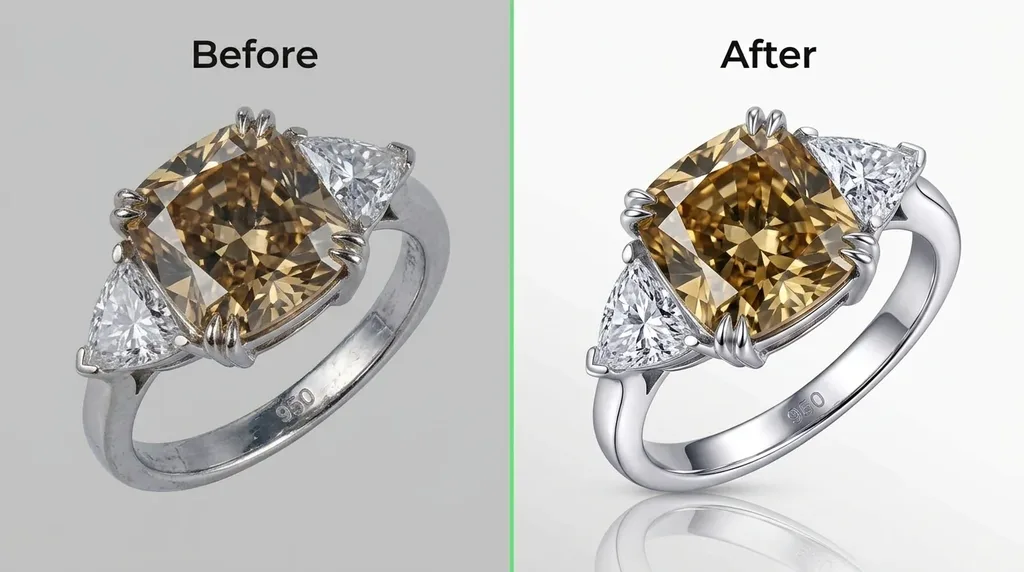
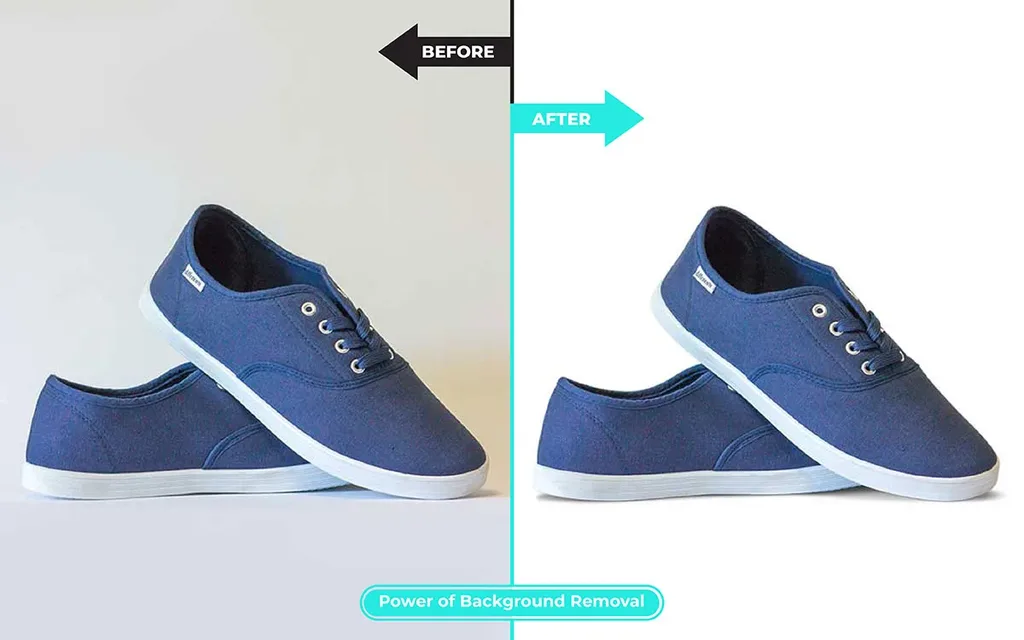
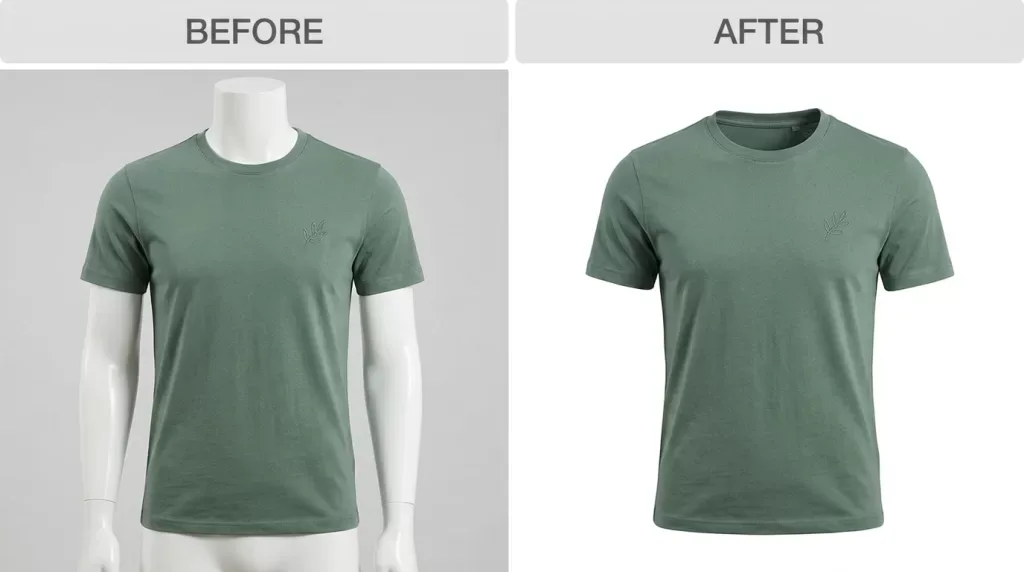
Let me give you the single most useful insight in this whole guide, because it will save you thousands. You are not paying for time at a desk. You are paying for how much of the image has to be decided rather than corrected. A basic clipping path corrects — it traces an edge that already exists. A ghost mannequin decides — it rebuilds the inside of a garment that the camera never photographed. A jewelry retouch decides — it rebuilds reflections to a light source that never existed. The more decisions an expert has to make on each frame, the more it costs. That is why a sheer fabric top on a transparent mannequin costs four times more than a plain box, and why a diamond ring costs more than a sneaker. The labor is genuinely different.
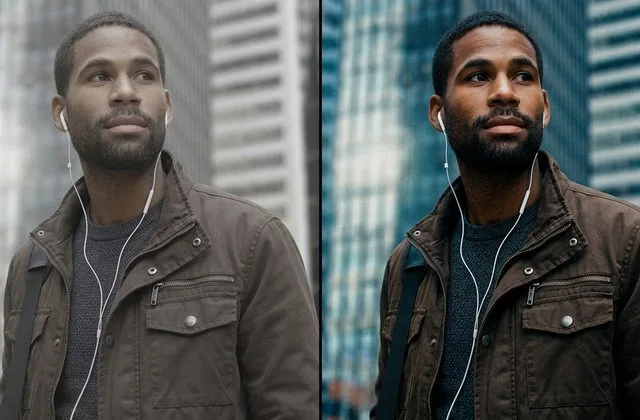
This is also why cheap retouching so often looks wrong. A $0.10 quote almost always means the work is automated or rushed, and automation cannot make decisions — it can only make corrections. When it hits a surface that requires judgment, it guesses. You get over-smoothed skin, dead-looking diamonds, and fabric that looks plastic. You are paying an expert specifically to avoid those guesses. If you want to see what expert professional retouching actually looks like at each tier, compare a few before-and-after sets side by side — the difference in texture and naturalness is visible in seconds.
The Five Tiers of Retouching Expertise (And What Each One Includes)
Every expert and studio sorts work into roughly the same five tiers. Know which tier your project belongs in, and 80% of your pricing confusion disappears.
| Tier | Price per Image | Time per Image | What’s Actually Included | Best For |
|---|---|---|---|---|
| Basic cleanup | $0.50 – $2 | 15–30 min | Dust/spot removal, exposure fix, basic color, crop & straighten | Bulk ecommerce, simple products |
| Standard retouching | $2 – $6 | 30–60 min | Natural skin smoothing, stray hairs, wrinkle reduction, light object removal | Portraits, fashion lookbooks, headshots |
| Advanced retouching | $6 – $15 | 1–2 hours | Frequency separation, detailed skin, advanced color grading, precise object removal | Close-up portraits, branding visuals |
| High-end commercial | $15 – $100+ | 2–4+ hours | Dodge & burn, texture preservation, complex compositing, campaign-grade polish | Fashion, beauty, luxury ecommerce heroes |
| Top-tier ad campaign | $1,000 – $5,000+ | Days | Perfected composites, print-ready masters, multiple revision rounds, usage rights | Magazine covers, national ads, billboards |
The jump from Tier 1 to Tier 5 is not linear — it is exponential, because the skill required changes completely. A Tier 1 editor needs to know how to use the spot healing brush. A Tier 5 editor needs to understand how light behaves on translucent materials, how color reproduces in print, and how to preserve micro-texture under 400% zoom. Those are different professions with the same job title.
Why Frequency Separation Costs More
If you get a quote for “skin retouching” and it seems high, ask whether the expert uses frequency separation. This technique separates an image’s texture (pores, fine lines, hair) from its color and tone, so an editor can smooth tone without erasing the texture that makes skin look real. It is the difference between a natural portrait and the dreaded “plastic skin” look. Proper frequency separation retouching takes real skill and time, which is why it lives in the advanced and high-end tiers. If a quote is suspiciously cheap for portrait work, it probably means they are running a one-click skin-smoothing filter instead — and you will see it the moment you zoom in.
Per-Image vs Hourly vs Retainer: Which Pricing Model Fits Your Job?
Experts bill in five different ways, and the right one depends entirely on what you are doing. Pick the wrong model and you will either overpay or get hit with surprise bills.
Per-image pricing is the default for bulk and catalog work. You know the cost before you place the order, and you pay for finished frames rather than effort. It rewards the expert for being fast, which means faster turnaround for you. This is the right model for ecommerce, product catalogs, and any repeatable, well-defined job.
Hourly pricing ($15–$150+/hour) is the classic freelance model and the right choice when nobody can say in advance how long a single image will take — high-end beauty, complex compositing, editorial campaigns. The catch is budget uncertainty: a job you thought would take two hours could easily take four. Always ask for a time estimate or a spending cap up front. Some commercial retouchers also offer day rates around $600/day for on-site or dedicated projects.
Flat project fee works when the scope is crystal clear — for example, “$1,000 for 50 catalog images with specific tasks agreed in advance.” Confirm the number of images, revision limits, and what happens if extra work gets added.
Subscription or monthly retainer is ideal for high-volume brands. You pay a fixed monthly fee for a set number of images, and you usually get faster turnaround and priority support. This often lowers the per-image cost by 15–25% compared to ordering one batch at a time.
In-house hire is the fifth option. A full-time retoucher in the U.S. costs roughly $3,000–$5,000+ a month in salary alone, before software, hardware, benefits, and management time. One person also has a hard ceiling on output and no second pair of eyes. Most brands end up blending approaches: in-house or a retainer for volume, and a specialist high-end expert for hero shots.
Location, Location, Location: The Country Price Gap
The single biggest factor in your quote is where the expert sits. Labor costs vary by an order of magnitude, and the skill gap has narrowed dramatically as Photoshop training has globalized. Here is how 2026 rates compare across markets, based on Digi-Texx’s country-by-country price guide and other published rate cards.
| Region | Basic per Image | Advanced per Image | Hourly (Expert) |
|---|---|---|---|
| USA / Canada | $0.29 – $6.75 | $20 – $100 | $30 – $200 |
| UK | ($2–$6.50) | £25 – £35 (~$30–$45) | £40 – £120 |
| India | From $0.20 | $5 – $15 | $7 – $30 |
| Philippines | $1 – $5 | $8 – $20 | $8 – $30 |
| Vietnam | $0.20 – $3 | $5 – $15 | $5 – $15 |
| Bangladesh / offshore studios | $0.25 – $0.80 | $2 – $8 | $5 – $20 |
U.S. freelancers typically charge $5–$25 per image, and U.S. agencies charge $10–$100+. Offshore outsourcing companies run $0.50–$8 for the same manual work. That 60–90% price gap is not because the skill is lower — the best offshore studios train editors for months and specialize in one technique each. It is purely labor cost and overhead. The real trade-off is communication, time-zone overlap, and quality control. For straightforward catalog work, offshore is almost always the smart play. For high-end creative work where you need back-and-forth direction, a mid-range U.S. or UK freelancer may save you revision rounds.
Freelancer vs Agency vs Studio vs In-House: The Real Comparison
Each hiring channel has a different cost structure and a different sweet spot. Here is how they actually stack up.
| Option | Cost | Consistency | Capacity | Best For |
|---|---|---|---|---|
| Freelancer | Lowest per-image, $30–$150/hr | Varies by person | Limited (one person) | Small batches, creative direction, one-off editorial |
| Offshore studio | $0.25–$8/image | High (specialized teams + QC) | Massive (1,000+/day) | Ecommerce volume, catalogs, fast turnaround |
| U.S. agency | $10–$100+/image | Highest | High | Campaigns, big brands, bundled production |
| In-house employee | $3k–$5k+/month fixed | You control it | One person’s ceiling | Ongoing volume needing full creative control |
Freelancers are perfect for a one-off editorial job or specialist beauty retouching, but prices climb quickly once you need consistency across a large batch — and if your freelancer gets sick, your batch stops. Agencies deliver consistency and capacity, but they bundle retouching into larger production packages, so even simple tasks end up priced at campaign rates. Offshore studios sit in the sweet spot for most ecommerce brands: transparent per-image pricing, dedicated quality-control layers, and the ability to absorb a 5,000-image seasonal drop without blinking. In-house only wins below about 50 images a month, or when every single frame demands unique creative direction.
The Smart-Budget Split: How Top Brands Actually Spend
Here is the strategy that will save you the most money, and almost nobody tells you about it: do not send every image to the same tier of expert. Split your catalog. Send the bulk — the 50 flat-lay product shots that just need background removal and dust cleanup — to a value-priced studio at around $1–$2 each. Send the 10 hero model shots that will live on your homepage and in ad campaigns to a high-end expert at $40–$50 each. Total spend: roughly $500, and 80% of it goes into the images that actually drive sales.
This works because of a simple truth the FixAnyPhoto high-end pricing guide spells out clearly: a single $50 high-end edit can become a hero image that lifts conversions across your whole site, while a $5 basic edit is perfectly fine for a supporting catalog frame that nobody zooms in on. Paying high-end rates for 500 catalog images is burning money. Paying basic rates for your homepage hero is costing you sales. Match the tier to the image’s job, and you get both quality and efficiency.
Seven Things That Make Your Quote Jump
Two orders for “retouching” can cost ten times more than each other because of these seven variables. Know them, and you can control your own cost.
- Complexity of the image. Lace, sheer fabric, flying hair, glass, chrome, and jewelry all require hand work that automation cannot do.
- Volume. Batch processing lowers per-image cost. Standard discounts run roughly 10% at 100+ images, 25% at 500+, and up to 40% at 1,000+. A 12-month retainer can unlock another 15–25%.
- Turnaround. Standard 24–48 hour delivery is the baseline. Same-day or 6-hour rush adds 25–100%. If you can plan ahead, you never pay rush fees.
- Revision policy. Unlimited revisions are priced slightly higher but usually cost less overall, because a re-edit at your end is more expensive than a correction at the studio’s. Watch for caps of 2 revisions followed by $2+ per extra round.
- Delivery format. A flat JPEG is cheap. Layered PSD, marketplace-sized exports, WebP, and TIFF all add cost. Ask what is included in the base rate.
- Usage rights. For top-tier commercial work, the price may include licensing for print, billboards, or national campaigns. A web-only usage license costs less.
- Skill and reputation. A retoucher with a decade of high-end fashion work charges more than a recent graduate — and for Tier 4 and 5 work, the difference in quality is visible to your customers.
For jewelry specifically, expect quotes at the upper end of every tier. A mirror-finish band reflects the entire room, so every reflection has to be rebuilt. A diamond brightened globally goes grey and dead — facet contrast has to be rebuilt facet by facet, at magnification. Proper jewelry photo editing is entirely hand work, which is why it consistently prices above general product retouching.
The Hidden Cost of In-House (And Why Most Brands Get It Wrong)
Doing it in-house feels like the cheap option because you do not see a per-image invoice. It is not. A U.S.-based photo editor earns a median around $22/hour per ZipRecruiter salary data, loaded to $28–$32 with benefits and payroll tax. Add Adobe Creative Cloud at $20–$70/month, a color-accurate monitor ($800–$2,000), a capable workstation ($2,000–$4,000), calibration tools, and cloud storage, and your effective in-house cost lands between $0.83 and $12.25 per image — almost always more expensive than outsourcing above 50 images a month. Below that threshold, in-house wins on control. Above it, the math is not close.
Red Flags: When a “Great” Quote Is a Trap
Cheap quotes hide expensive mistakes. These six patterns will surface before you sign anything, if you ask.
- The “$0.10 per image” quote. Almost always pure AI marketed as manual. It fails marketplace zoom inspection and forces a manual redo. True cost: $0.40–$0.60 per image.
- “Unlimited revisions” with a hidden cap. Read the terms. A cap of 2 revisions followed by $2 each can add $200 to a 500-image batch.
- “24-hour turnaround” with no SLA. If it is not in the contract, it is not a promise.
- Undisclosed minimum order fee. A $15 minimum on a $9 test job is a 66% surcharge.
- JPEG-only base quote. PSD or layered delivery adds $0.20/image after signing. Ask up front.
- The free-trial bait. The trial is edited by a senior lead; the production batch goes to trainees. Require the same editor on trial and production.
Ethical experts and studios welcome all six questions and answer them in writing before invoicing. Any provider that dodges them is signaling problems that will surface later.
How to Hire Right: A Five-Step Process
Hiring a retouching expert is not complicated, but most people skip the one step that matters most — testing on their own hardest images. Here is the process that works.
- Send the same sample images and the same brief to at least three experts. Prices can jump from $50 to $150 for the same photo. Compare portfolios, style, and communication — not just the number.
- Test on your hardest images, not your easiest. Every expert can cut out a shoe. Send the sheer top, the chrome bottle, the black-on-black product. That is where skill shows.
- Write a specific brief. Instead of “make it perfect,” list exactly what you want: keep freckles, clean flyaways, fix fabric wrinkles, gently enhance the eyes, correct color to this reference. Share 5–10 anchor images showing your desired look. This eliminates 90% of revision rounds.
- Ask about revision policy and turnaround SLA in writing. Get the all-in rate, formats included, and data security policy (NDA, file deletion) confirmed.
- Start with a small paid batch before committing volume. Even after a free trial, a 20-image paid run tells you how consistency holds across a batch — which is what you are actually buying.
And one more thing: better product photography cuts your editing bill by 30–50% before you ever hire anyone. Clean lighting, consistent white balance with a gray card, and sharp focus mean less work in post. The Baymard Institute’s product image UX research consistently finds that high-quality visuals directly lift conversion — so the money you spend on both shooting and retouching is an investment, not an expense.
Real-World Budget Scenarios (So You Can Benchmark)
Scenario A — Amazon seller, 100 simple product images. Basic clipping path + shadow creation at $0.30–$0.50 each, 10% volume discount. Total: roughly $70–$90. Fits inside the ~$50/month image budget most FBA guides recommend.
Scenario B — Apparel brand, 500 SKUs quarterly with ghost mannequin. 500 × $0.79–$1.50, 25% volume discount. Total: roughly $300–$560 per quarter, ~$1,200–$2,200 per year. Compare to one in-house editor at ~$46,000/year loaded. Net savings: roughly $44,000/year.
Scenario C — Fashion brand, split budget. 50 catalog product shots at $2 each ($100) + 10 hero model shots at $40 each ($400). Total: $500, with 80% of spend on the images that drive homepage and ad conversion.
Scenario D — Wedding photographer, 30 weddings/year, 2,500 images each. 75,000 images at $0.05–$0.25 for AI culling and batch color, plus manual QC on hero shots. Total: $3,750–$18,750/year, depending on how much manual retouch you include.
Frequently Asked Questions
How much does it cost to hire an image retouching expert per image?
Basic cleanup runs $0.50–$2 per image, standard professional retouching $2–$6, advanced $6–$15, high-end commercial $15–$100+, and top-tier advertising work $1,000–$5,000+. Most ecommerce brands land between $0.50 and $5 per image when outsourcing.
How much do retouchers charge per hour?
Entry-level freelancers charge $15–$35/hour, experienced professionals $35–$75, and high-end commercial retouchers $75–$150+. The U.S. median for an experienced pro is around $65–$75/hour. Day rates for on-site work run about $600.
Is it cheaper to hire a freelancer or an agency?
Freelancers usually have the lowest hourly rates but limited capacity and variable consistency. Agencies deliver the highest consistency but bundle retouching into expensive production packages. Offshore studios sit in the middle — per-image pricing, high volume capacity, and dedicated QC — and are usually the cheapest option above 50 images a month.
Why do quotes for the same photo vary so much?
Location, skill level, and usage rights drive the swing. A New York retoucher charges more than one in a smaller city. A studio may quote $20/image for volume and $5,000+ for a campaign image. Send the same samples to several providers and compare portfolios, not just price.
How long does it take to retouch one photo?
Basic cleanup takes 15–30 minutes. Standard retouching 30–60 minutes. Advanced work 1–2 hours. High-end commercial retouching can take 2–4+ hours per image, and top-tier ad work can take days. A professional editor typically processes 10–30 basic photos per hour.
Is outsourcing retouching overseas safe and good quality?
Yes, if you choose the right partner. The best offshore studios use specialized editors, dedicated QC layers, NDAs, and secure file transfer. Quality is not the trade-off — process discipline is. Test on your hardest images first.
How much should I pay for high-end beauty or fashion retouching?
Most high-end edits fall between $20 and $50 per image. Advanced beauty or editorial work reaches $100–$300+. National ad campaign work can exceed $1,000 per image. The price includes usage rights and multiple revision rounds.
Can I negotiate retouching prices?
Yes. Volume is your biggest lever — a 12-month retainer at 500+ images/month typically unlocks 15–25% below public rates. Flexible turnaround (48–72 hours instead of 24) can add another 10–20%. Competing quotes from 2–3 providers give you real leverage.
Final Thought: You Are Hiring Judgment, Not Software
Anyone can buy Photoshop. What you are paying an expert for is the judgment to know what to fix and what to leave alone — to smooth skin without erasing pores, to brighten a diamond without killing its fire, to rebuild a reflection so it looks like it was always there. That judgment is what separates a $0.50 image from a $50 one, and it is what your customers subconsciously respond to when they decide to buy. Match the tier of expert to the job each image has to do, test on your hardest files, and never let the cheapest quote be the only deciding factor. The right expert will pay for themselves in higher conversions and fewer returns — usually within the first batch.