
TL;DR: Professional car photo editing turns raw dealership and marketplace shots into high-converting listings via background removal, retouching, color correction, and enhancement. This guide covers what each service does, who needs it, DIY vs pro trade-offs, 2026 pricing, and how to pick a partner.You already know the feeling. You take twenty photos of a clean, recently detailed sedan on a bright lot, upload them to your listing, and then… nothing. The leads trickle in. The car sits. Meanwhile, the dealership down the street seems to move inventory every week with photos that look like they came out of a studio.
The difference is rarely the car. It is the editing.
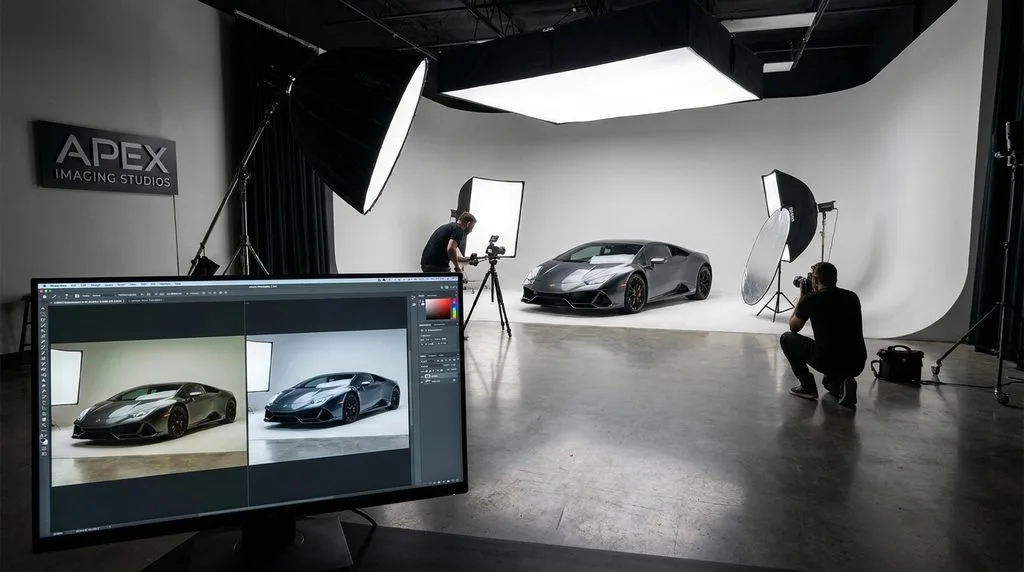
A raw photograph from a phone or DSLR captures what was there — a patchy sky, a distracting fence, reflections of you in the hood, a slightly off-white balance. Professional car photo editing removes all of that and leaves only the vehicle, lit consistently, presented against a clean backdrop, and polished enough that a buyer will click, call, and show up.
This guide walks you through every part of the industry: what the five core terms actually mean, why edited photos measurably lift vehicle detail page (VDP) views, which services you actually need, how much you should expect to pay, and how to choose a provider without getting burned. Whether you run a dealership, sell on eBay Motors or Facebook Marketplace, shoot cars professionally, manage a rental fleet, or own a body shop, by the end you will know exactly what to order and what to pay.
What Is Professional Car Photo Editing? (Definitions)
Before comparing prices, understand five terms used by automotive photo editing providers. Each describes a different part of the process.
Car image editing service is the broad term for post-production work on vehicle photos. It includes exposure adjustments, color correction, retouching, background removal, and background replacement. Providers often offer these tasks separately, so customers can choose the edits they need.
Car photo editing service usually means a complete solution. You upload vehicle photos, explain your preferred style, and receive polished images ready for dealership listings or marketing. A package may combine background editing, color correction, retouching, and quality checks in one per-image price. This suits dealerships processing inventory regularly.
Professional car photo editing describes the quality and consistency of the results, not one specific task. Skilled editors, or AI-assisted teams with human quality control, produce natural-looking, commercially usable images. Clean edges and realistic shadows are essential when vehicles are separated from their surroundings. This clipping path guide explains how precise paths create accurate selections.
Car background removal service isolates a vehicle from its original setting and places it on a transparent, white, or custom background. It is popular for clean online listings. Depending on the result required, providers may offer half-cut or full-cut editing. Explore these background removal methods for an overview of common techniques.
Car photo enhancement adds the finishing touches that make an image look polished. It can include exposure, contrast, and white balance correction; sharpening; glare reduction on glass and chrome; dust and scratch removal; wheel brightening; and color matching across a batch. These adjustments help every vehicle look clear, consistent, and appealing to buyers.
Understanding these terms makes it easier to compare providers, see what a quoted price includes, and choose the right editing package for your inventory today.
Why It Matters: The Numbers Behind Edited Listings
Pretty photos are nice, but the reason this industry exists is measurable lift in VDP views — and VDP views are the leading indicator of leads and sales.
Cox Automotive / Autotrader data shows that used car listings with multiple custom photos, compared with a stock photo, receive 305% more VDPs per listing (Autotrader Site Data, Q2 2014). Compared with no photo at all, listings with multiple photos get 372% more VDP views (same source and year). The effect is not subtle, and it is not limited to used inventory.
For new-car listings, multiple custom photos versus a stock photo increase click-throughs to the VDP by 364% (Autotrader, Q2 2015). On Autotrader specifically, new vehicles with multiple custom photos get 91% more VDP views versus no photos, 116% more versus a stock photo, and 61% more versus a single custom photo (same source, same year). More is genuinely more here: VDP views per listing steadily increase up to about 48 photos, with a recommended minimum of 15 and a practical target of up to 45 images including imperfections, close-ups, and interior details (Cox/Autotrader, 2015).
On the used side, a separate Cox Automotive analysis found that used vehicles with a set of custom images receive 349% more VDP views than similar models shown with stock photos (Cox Automotive research, cited in HomeNet Auto, 2019).
The takeaway is simple: a buyer’s first impression is digital, and the quality and quantity of your photos directly determine whether they click through to your listing. Editing is not a vanity expense. It is a conversion lever.
Core Services Breakdown
Most providers offer a similar menu. Here is what each one does and when you need it.
Car Background Removal (Half Cut vs Full Cut)
This is the foundation service. The editor traces the vehicle — by hand with a clipping path, with AI, or usually a hybrid — and separates it from the original background.
- Half cut removes the upper background (sky, buildings, trees) but keeps the ground, the tires’ contact with the pavement, and the natural shadow. It looks realistic and is the standard for dealership inventory listings.
- Full cut removes everything, delivering the car on a transparent PNG or a fully custom backdrop. Use this for design work, advertisements, virtual showrooms, and any case where you will composite the car into another scene.
- Interior cut applies the same isolation logic to cabin photos, removing distracting seats-in-mirror reflections or cluttered backgrounds.
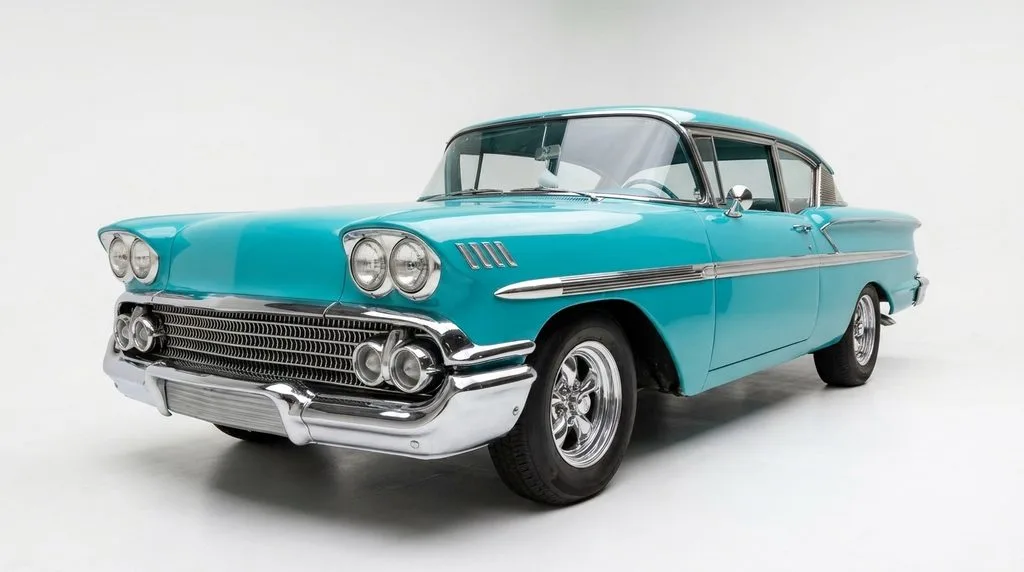
A clean, consistent backdrop matters. Many top sellers standardize on white or studio-gray inventory shots, and the reasoning is laid out in this guide to white background photos for product-style presentation.
Car Photo Enhancement and Retouching
Once the car is isolated, enhancement does the heavy lifting:
- Color correction and white-balance matching across the whole set.
- Exposure, contrast, and highlight recovery (especially on glossy paint).
- Dust, scratch, and minor dent removal on the body.
- Glare and unwanted reflection removal on windows, chrome, and the hood.
- Wheel and rim enhancement — brightening alloys that came out dark or muddy.
- Number-plate removal or blurring for privacy.
- Shadow and reflection creation so the car looks grounded, not floating.
- Optional color change for marketing variants or “what if” previews.
Advanced and Volume Services
For larger operations, providers also offer virtual showroom placement, 360° spin sets, HDR blending for tricky lighting, and interior editing. These are priced per set rather than per image and usually require a dedicated account manager.
Service Comparison Table
| Service | Best for | Typical turnaround | Estimated price per image (2026) |
|---|---|---|---|
| Background removal — basic cutout | Marketplace listings, catalogs | 24h standard; rush 2–6h | $0.18–$1.50 |
| Half cut (keeps ground & shadows) | Dealership inventory, realistic look | 24h | $0.30–$1.80 |
| Full cut / transparent PNG | Ads, design assets, virtual showroom | 24–48h | $0.40–$2.00 |
| Photo enhancement + retouching | Premium listings, photography clients | 24–48h | $1.50–$15 |
| Color correction + shadow/reflection | Consistent inventory look | 24h | $0.50–$3 |
| 360° spin / virtual showroom set | High-end dealer websites | 48–72h | $10–$60 per set |
| Premium high-end retouch (luxury/ads) | OEM, magazines, campaigns | 48–72h | $3–$30+ |
Prices are estimated and typical from public listings (2026); actual quotes vary by complexity, volume, and provider tier.
Who Needs Professional Car Photo Editing?
You might assume this is only for big dealerships. It is not. The buyer base is broader than you think.
Car Dealerships (the Dominant Segment)
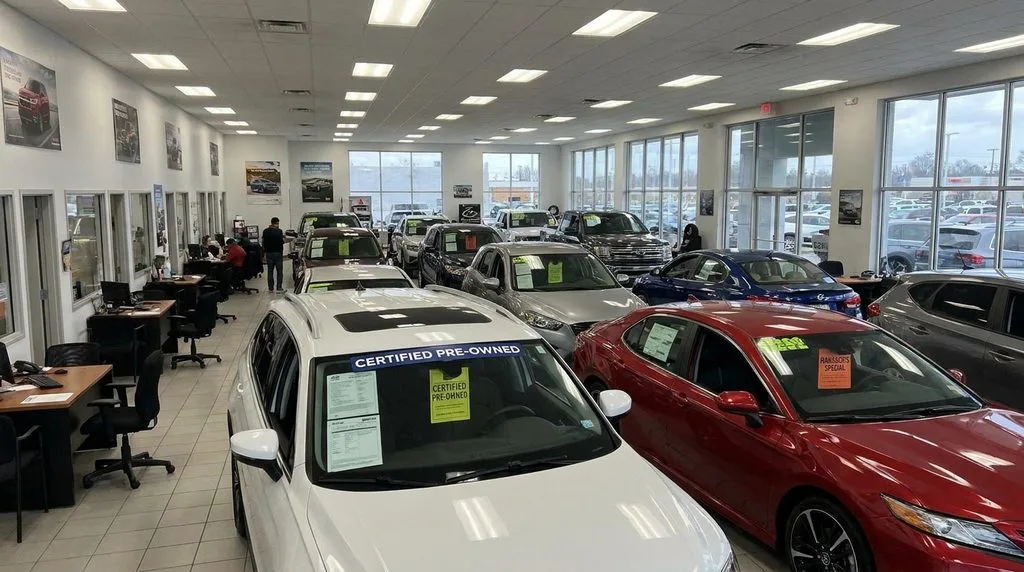
Dealerships move the most volume. A single-rooftop store might photograph 20–60 new arrivals every week, and consistency across that inventory is what makes the website look credible. A half cut with standard enhancement is the usual order, delivered in 24 hours so cars go live the same day they hit the lot.
Automotive Photographers
Professional shooters often outsource the editing so they can spend more hours behind the camera. A photographer will shoot a dealership’s inventory in a day, upload the RAW files, and receive finished JPGs the next morning — keeping the client relationship while handing off the production work.
eBay Motors and Facebook Marketplace Sellers
Individual sellers and small used-car dealers on marketplaces benefit disproportionately, because they compete against listings with zero or one blurry photo. A clean white-background set with a dozen detail shots stands out immediately. eBay publishes its own eBay Motors guide for preparing photos, and the shooting half is covered in these car photo tips from eBay Motors.
Rental Fleets and Leasing Companies
Fleets need uniform imagery across hundreds of vehicles on booking sites. Editing enforces a consistent look even when the cars are photographed in different cities, in different weather, by different people.
Body Shops and Repair Facilities
Body shops use before-and-after editing to showcase repairs: removing distracting backgrounds, matching lighting, and presenting the finished work in the best light for their website and Google Business profile.
Auction houses, OEM marketing teams, importers and exporters, and automotive magazines round out the buyer list. If you sell, rent, restore, or photograph cars, you are in the target market.
DIY vs Professional: Which Should You Use?
The rise of AI background-removal tools has made DIY tempting. Here is the honest trade-off.
| Factor | DIY (AI tools / desktop software) | Professional car photo editing service |
|---|---|---|
| Effective cost per image | ~$0.05–$0.65 (SaaS subscription) plus your time | $0.18–$1.50 basic; $3+ premium |
| Speed | Near-instant to a few hours | 2–6h rush; 24–48h standard |
| Quality consistency | Variable; AI often glitches on chrome, glass, wheel spokes | Hand-checked, consistent at volume |
| Complex edges (spokes, reflections, antenna) | Frequently fails, needs manual cleanup | Hand clipping path handles it |
| Scaling to 50+ images/week | Limited by your own hours | Scales to thousands per week |
| Best for | Occasional sellers, quick drafts, low-stakes listings | Dealers, photographers, fleets, high-volume sellers |
The crossover point is usually around 10–15 images per week. Below that, a DIY tool plus a little manual cleanup is cost-effective. Above that, your hourly rate as the owner or manager almost certainly exceeds the per-image editing fee, and the consistency gain alone pays for the service.
How to Choose a Car Photo Editing Service
Not every shop is the same. Use this checklist before you commit.
- Free trial first. Near-universal in the industry; expect 2–10 free test images. Send your hardest image — the one with tricky reflections or complex wheel spokes — not your easiest.
- Turnaround classes. Confirm they offer rush (2–6h), same-day, standard (24h), and complex (48h) lanes, and that the class you need is included in your price.
- Revisions and guarantee. Look for unlimited revisions and a money-back guarantee on work you are not satisfied with.
- Security and NDA. If you shoot unreleased vehicles or client inventory, require an NDA and confirm files are deleted after delivery.
- File formats. They should accept RAW and HEIC uploads and deliver JPG, PNG, PSD, or TIFF as needed.
- Platform compliance. If you syndicate to Google Vehicle Listings, your images must meet Google’s requirements: JPEG or PNG only, minimum 256×256 (800×600 recommended), max 16MB / 64MP, recommended 4:3 aspect, no watermarks or overlays, no placeholder or stock images, and a minimal background. Confirm your editor knows these Google image requirements so your listings do not get rejected.
- Volume discount structure. Ask for the discount schedule up front. Typical public listings show 10–40% discounts kicking in around 150–5,000 images per month.
- Commercial usage rights. Make sure you own full commercial rights to the final files. It should be standard; get it in writing.
The Process, Step by Step
A professional engagement usually follows this flow.
- Shoot and upload. Capture your set (aim for at least 15, up to 45 images per vehicle) and upload RAW/HEIC/JPG files via the provider’s portal, FTP, or direct DMS/API integration.
- Brief and sample approval. Describe your house style — background color, shadow style, enhancement level. Approve a sample batch of 2–10 images before the full run.
- Background removal. The car is cut out using a clipping path or AI-assisted tool, with hand cleanup on complex edges. Half cut or full cut is applied per your brief.
- Retouching and enhancement. Dust, scratches, glare, and plate issues are handled; wheels and paint are enhanced; color is corrected.
- Shadow and reflection creation. A natural contact shadow and subtle ground reflection are added so the car sits realistically on the new background.
- Quality control. A second editor reviews the batch against your style guide. This is the step cheap providers skip — and where you notice the difference.
- Delivery and revisions. Finished files arrive in your chosen format. Request revisions within the stated window; most providers include them free.
Pricing Tiers and Turnaround Benchmarks
Here is how the market segments, based on typical public listings (2026). Treat these as benchmarks, not quotes.
| Tier | Profile | Estimated price per image | Typical turnaround | Notes |
|---|---|---|---|---|
| AI-native / SaaS | Automated tools, API/DMS integration | $0.05–$0.65 | Near-instant to 4h | Fast and cheap; weaker on complex edges |
| Hand-edited outsourcing shop | Clipping-path teams, free trial 2–10 images | $0.18–$1.50 basic to standard | 24–48h standard; rush 2–6h | Volume discounts 10–40% at 150–5,000 images |
| Premium / high-end retoucher | Luxury, advertising, editorial | $3–$30+ | 48–72h | Portfolio-driven, creative direction included |
Most buyers land in the middle tier. It gives you human quality control at a price low enough to edit every vehicle, not just the premium ones.
Common Mistakes to Avoid
Even with a good editor, these mistakes cost you conversions.
- Expecting editing to fix bad photography. Editing can fix a lot. It cannot fix a car shot in harsh midday shadow with the wrong exposure bracket. Shoot for the edit.
- Over-editing. Unnaturally saturated paint, missing shadows, or wheels that glow make buyers suspicious. Realism outsells fantasy.
- Inconsistent backgrounds. If half your inventory is on white and half on gray, your website looks sloppy. Pick one house style and enforce it.
- Forgetting privacy. Blur or remove number plates and any visible ownership documents before publishing.
- Ignoring platform specs. A beautiful 2MB PNG with a watermark will be rejected by Google Vehicle Listings and waste the whole effort.
- Skipping the free trial. Always test with your hardest image first.
Best Practices: Shoot Before You Edit
The best editing starts before you open an editing app. A few shooting habits cut your editing bill in half and make the final images better.
- Shoot at golden hour or in open shade; avoid direct overhead sun.
- Walk around the car: front three-quarter, rear three-quarter, straight side, interior, engine bay, wheels, and close-ups of imperfections.
- Keep the horizon level and the car centered with room around it for cropping.
- Clean the car first — a real detail is cheaper than retouching dust.
- For lighting and composition guidance, Canon’s Canon car photography article walks through magazine-style capture, and this automotive photography guide covers the full shoot-to-edit pipeline.
The Future: AI in Car Photo Editing
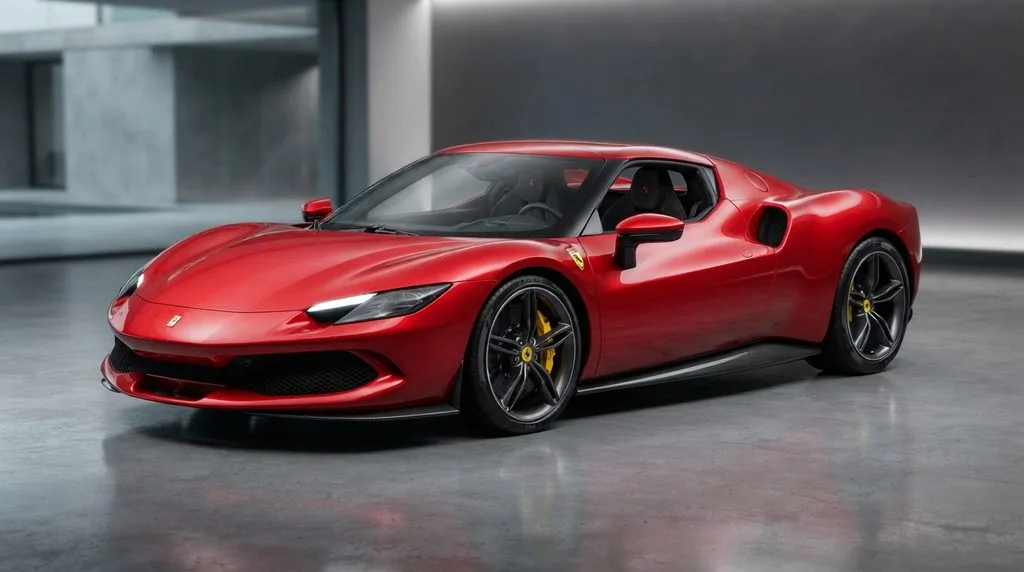
AI tools have already collapsed the price and turnaround for simple cutouts, and they keep improving. For a plain side-profile shot on a clean background, an AI tool can now deliver a usable cutout in seconds. The catch is the same as it has always been: chrome reflections, glass, wheel spokes, antennas, and complex shadows still trip up automated systems, and at volume those failures add up.
The winning workflow in 2026 and beyond is hybrid: AI for the first pass, human editors for cleanup and quality control, and API/DMS integration so the whole pipeline runs without manual uploads. Providers that offer this hybrid model will keep winning volume business; pure AI tools will dominate the low-end, low-volume segment.
Key Takeaways
- Professional car photo editing is a measurable conversion lever: multiple custom photos can lift VDP views by hundreds of percent versus stock or no photos.
- Background removal (half cut vs full cut) is the foundation service; enhancement and retouching are the polish that actually sells the car.
- For most sellers above 10–15 images per week, a hand-edited outsourcing shop at roughly $0.18–$1.50 per image beats DIY on both cost and consistency.
- Always run a free trial with your hardest image, confirm revisions and commercial usage rights, and verify the provider meets platform image requirements.
- Shoot for the edit: clean car, good light, 15–45 images per vehicle, and a consistent house style.
Frequently Asked Questions
What does a car photo editing service actually do?
It takes your raw vehicle photos and returns listing-ready images. The typical workflow includes background removal or cutout, color correction, retouching of dust and glare, shadow creation, and quality control. You can order individual edits or a bundled per-image package.
How much does car background removal cost per image?
Estimated and typical from public listings (2026), basic background removal runs about $0.18–$1.50 per image for hand-edited shops, with half and full cuts at the higher end of that range. AI-native tools can be as low as $0.05–$0.65 per photo, and premium high-end retouching starts around $3 and can exceed $30 for advertising work. Volume discounts of 10–40% are common at 150–5,000 images per month.
How long does professional car photo editing take?
Standard turnaround is 24 hours for simple cutouts and enhancement, with complex jobs taking 48 hours. Most providers also offer rush lanes of 2–6 hours and same-day delivery, sometimes at a premium. Confirm the turnaround class is included in your quoted price.
Can’t I just use an AI background remover?
For occasional, low-stakes listings, yes — an AI tool is fast and cheap. For chrome, glass, wheel spokes, and other complex edges, AI frequently fails and needs manual cleanup, and it cannot guarantee consistency across a large inventory. Above about 10–15 images per week, a hybrid AI-plus-human service is usually more cost-effective.
What file formats should I send and receive?
Send RAW or HEIC files if you have them — they give the editor the most data to work with. Expect delivery in JPG for web listings, PNG for transparent backgrounds, and PSD or TIFF if you need layered files for further design work. A good provider supports all four.
Do I own the edited images?
You should own full commercial usage rights, and this should be stated in the provider’s terms. Reputable services also offer NDAs, delete your files after delivery, and include unlimited revisions and often a money-back guarantee. Get the usage rights in writing.
How many photos should I include per vehicle listing?
Aim for a minimum of 15 and up to 45 images per vehicle. VDP views per listing steadily increase up to about 48 photos (Cox/Autotrader, 2015), and the set should include exterior angles, interior, close-ups, wheels, and even honest shots of imperfections so buyers know what to expect.
What is the difference between a half cut and a full cut?
A half cut removes the upper background — sky, buildings, trees — but keeps the ground and the car’s natural contact shadow, which looks realistic for inventory listings. A full cut removes everything and delivers the car on a transparent or fully custom background, which is better for advertisements, design composites, and virtual showrooms.
Conclusion
Car photo editing is one of the highest-return investments you can make in automotive marketing. The data is consistent across used and new inventory: more, better, custom-edited photos drive dramatically more VDP views, and VDP views drive leads. For a dealership, a marketplace seller, a photographer, a fleet, or a body shop, the question is not whether to edit — it is which tier of service matches your volume and quality bar. Start with a free trial, set a house style, enforce platform compliance, and let the conversion numbers do the convincing.